
In Persepolis and Epileptic there is a lot of focus put on culture. There is discussion of other cultures, their stories, and even the art. We know of course that there has to be a reason for these two graphic novels to incorporate this aspect of culture. What is the significance of the use of culture in both of these graphic novels?
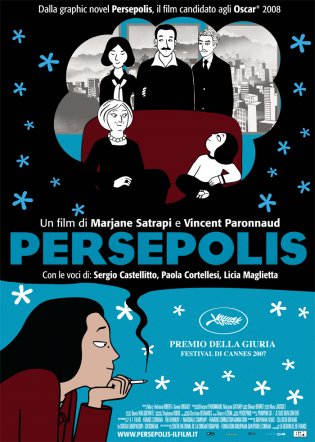
Persepolis is a story about the author's life growing up in the Middle East during the times of revolution and the constant change in government. It is only natural that such a story would talk extensively of what the culture during that time period was, so that we may better understand the lifestyle and the troubles Marjane Satrapi had to go through. The diverse culture we see in Persepolis has a powerful impact because we see that the United States and Europe were a very big deal in the life of Marjane Satrapi; the posters and clothes she recieved from her parents we saw were a big risk to own during the time period she was growing up in.
Epileptic told the story of a family and how difficult it was growing up with the fact that they had many difficulties with their brother, Jean-Christophe, since he had constant seizures and would have to see the doctor and get much help because he had epilepsy. The art style in Epileptic is rather strange, but it also changes to the art styles and symbols of other cultures. The best example of this would be on pages 204 & 205. These pages show us many diverse cultures and we see these images throughout the story. David B. uses these images usually when he is telling a story he has heard or even to describe to us the monsters that his brother faces and how they fight them. We also have a moment where we find out that his brother attempts to draw a Nazi flag and in a way supports Hitler. We all see things like Anubis and other Egyptian figures throughout the story. David's use of these images is questionable, but he does use the history and cultures to enhance his story and even give us a different perspective and more emotional twist to enhance the story, because let's face it a story with such odd imaging and art is much more compelling and exciting then simply seeing text. The imaginative approach of Epileptic is definitely a strong suit for his story just as the realism of Persepolis is it's strength.
White would discuss the art of both these stories in the same way I believe. He would probably express greatly a
 s to how this art style is a very influential matter on what the author is trying to express and in this case it is history. Both of the stories deal with a quite a bit of history and White tells us that a story based on History always has to follow a sequence of events and Persepolis and Epileptic are no exception. Both of the stories do follow a set timeline, but the use of their art and their story bring out the emotion of the time. Both stories explain a past history: Persepolis tells a story about the revolutionary times in Iraq and Iran; the difficulties of growing up in such harsh revolutionary and oppressive times, and Epileptic tells us the past of a two brothers and their sister growing up with their brother having a difficult mental disorder. The art talked about earlier is greatly used to give a graphic look and feel of the past they dealt with. The realism of Persepolis giving us a great sense of harshness and despite the harsh look that can be given we all see rebelious attitudes and how the art can change easily from emotion to emotion, scared and sad to angry or happy. There is also a lot of hidden art though such as page 91 the second to last panel. We see the two children and Marjane Satrapi going to bed and if you look at both their bedsheets we see the image of the American flag. It is a subtle cultural image, but it is indeed there. Epipleptic takes place from 1964 to 1996 and uses a lot of strange and imaginitive art to bring out a lot of the emotion during the time and the actual power of their history. The constant visits to doctors who would never really bring his brother improvement and how it effected him and his family.
Just as a side note:
I have to admit I found it slightly humorous during this story the moment where his art is being criticized on 293 - 294 and how his art is considered frightening and even when he is told to change it to make it less frightening he stubbornly uses the change to make it even more frightening and we see this connection from that scene to the next scene where he crosses paths with his brother on 295 - 296 because as the scene progresses his appearance changes and becomes more and more threatening.
(I just felt like pointing this out. =P )


For some reason, when you say that both stories are "history" stories, I have to disagree. Yes, they are both telling a story of a past event (thus making it history I suppose).However, Epileptic is more of a story of a life with an illness making use of creative and sometimes scary drawings. Whereas Persepolis, although also a story of a life, seems to focus more on real events and facts while also giving the reader a more personal look at those times through the eyes of a little girl. I would have to say that Persepolis is more history than Epileptic.
ReplyDeleteEpileptic could be interpreted as somewhat of a history of the location and time period. French culture is shown in the clothing, people, and events. Evidently there was still a large hippie movement in France in the early 1970s and a lot of scam artists and fake doctors were able to capitalize on it.
ReplyDelete